The Stage and the Exit: On Synecdoche, New York and The Truman Show
Date
February 10, 2026
Tags

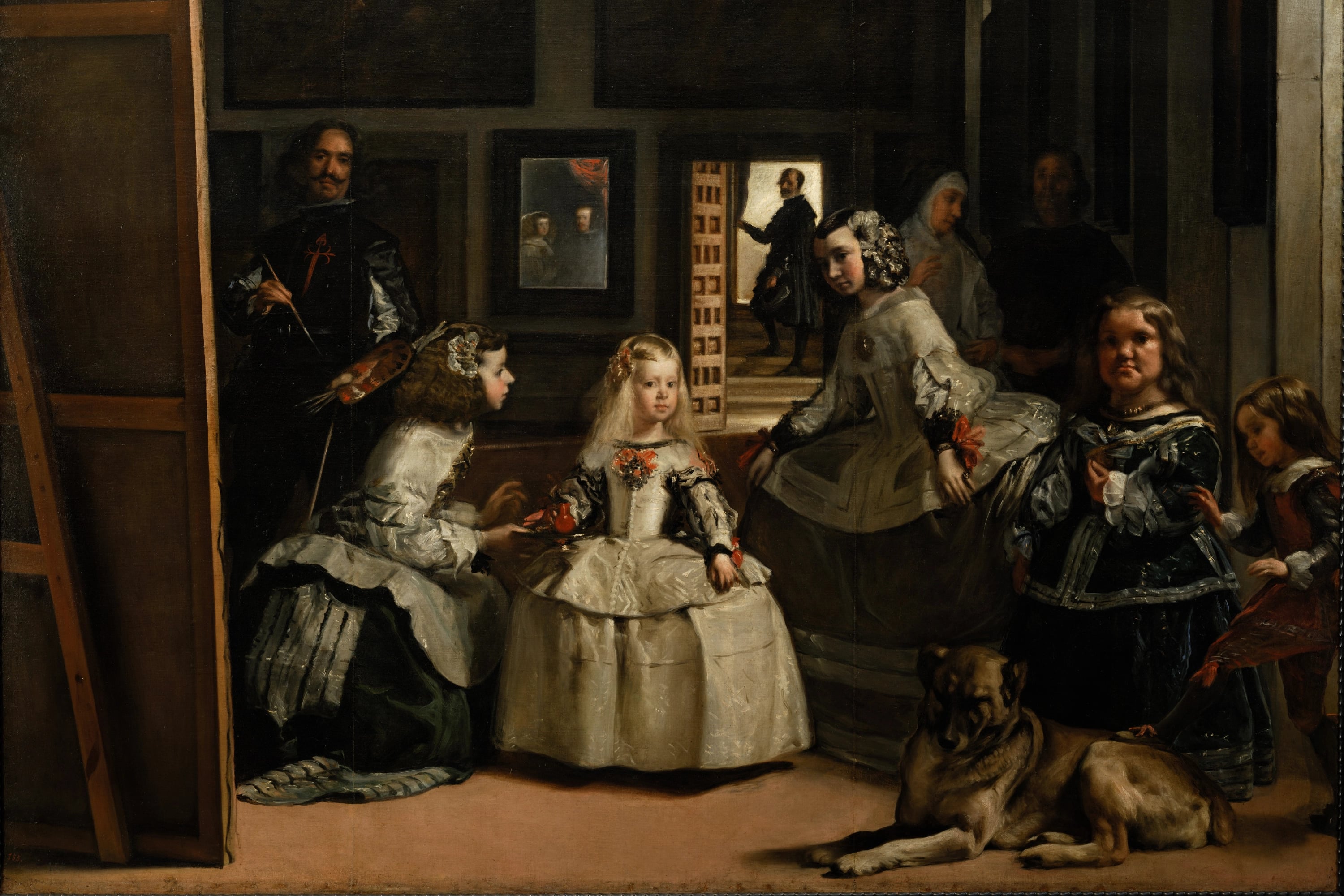
Two films about constructed realities and the selves we perform within them. One escapes the stage. The other becomes it. A synthesis.
The Door and the Cue
There's a door, painted to look like a wall, at the edge of an artificial sky. A man touches it and the audience holds its breath.
There's an earpiece, feeding instructions to a dying man in a collapsing warehouse. He opens his mouth to speak and a voice cuts him off: "Die."
The Truman Show and Synecdoche, New York are separated by a decade, opposite coasts, opposite tones. One is a high-concept Hollywood satire with a triumphant ending. The other is a labyrinthine art film that fades to white as its protagonist expires mid-sentence. They shouldn't be in conversation.
And yet, they won't stop talking to each other in my head. Both films ask what it means to live inside a construction. Both films ask what happens when you realize the construction is there. But they arrive at answers so different that putting them side by side feels less like comparison and more like a philosophical collision.
Truman walks out of the stage. Caden becomes it.
The Architecture of Control
Seahaven is a dome. A literal dome, visible from space, housing an artificial sun and thousands of hidden cameras. Truman Burbank has lived his entire life inside this construction, believing it to be reality.
Every person he's ever known is an actor. Every event he's ever experienced was scripted. The weather, the traffic, even his father's "death" at sea: all manufactured by Christof, the show's creator, who watches from a control room built into the fake moon.
The genius of the film's architecture is its literalness. The boundary is visible once you know to look for it. A stage light falls from the sky. A radio picks up production chatter. The rain follows Truman and only Truman. The constructed world has seams, and Truman, after three decades of believing, starts to notice them.
Caden Cotard's prison is the opposite. There's no dome, no hidden cameras, no Christof pulling strings. Instead, Caden builds his own cage. After receiving a MacArthur "genius" grant, he rents a warehouse in Manhattan and begins constructing a full-scale replica of New York City.
Actors are hired to live inside. They play "real people," including Caden himself. The replica grows. Then it needs its own warehouse inside it. Then that warehouse needs its own replica. The recursion becomes never-ending.
Truman's prison was built by someone else. Caden's prison was self-constructed. And that distinction, I think, changes everything about what escape means.
Christ-Off and Cotard
The names in these films are not accidents.
Christof. Christ-of. Or maybe Christ-off, a false god, a deity who does everything a god can do but nothing a god should do. He speaks from the sky. He controls the weather.
He claims to know Truman better than Truman knows himself. In the film's climactic scene, his voice booms through speakers as Truman stands at the exit door:
"You were real. That's what made you so good to watch."
It's a statement of possession framed as a compliment. Christof loves Truman the way a collector loves a rare specimen. The cage was built out of that love. The manipulation was done in its name.
Caden Cotard's name references Cotard's Delusion, a psychiatric condition where patients believe they are dead, do not exist, or are missing internal organs. Throughout Synecdoche, Caden thinks he is dying. His body fails in mysterious ways.
Time accelerates around him. He watches decades pass in what feels like months. In one reading, the entire film takes place in the compressed final moments of a dying man's consciousness, his brain scrambling to make meaning as it shuts down.
But here's the crucial difference: Christof is a false god imposing control from above. Caden is a false god imposing control from within. Christof built a world for someone else to live in. Caden built a world to avoid living at all.
Escaping vs. Becoming
The Truman Show's ending is famous for a reason. Truman sails toward the edge of the dome, survives a manufactured storm, and finds the exit. Christof's voice begs him to stay. Truman delivers his catchphrase, bows to the audience, and walks through the door.
The world outside is unknown, probably harsh, definitely unpredictable. He goes anyway.
It's cathartic. It's triumphant. It's the kind of ending that makes audiences cheer.
Synecdoche offers no such release, not remotely.
As the decades pass and Caden's play consumes more of his life, he loses the ability to direct it. An actress named Millicent Weems takes over, giving him an earpiece through which she issues instructions. Caden, the creator, becomes a character in his own work. Then he's demoted further. Mistaken for Ellen, a cleaning lady, he accepts the role. He spends his final years scrubbing the replica of his ex-wife's apartment, following directions whispered into his ear.
In the film's last minutes, Caden finally has a revelation. He knows how to perform the play now. He has something to say. But before he can speak, the voice in his earpiece delivers his final cue: "Die."
And he does.
Truman escaped his stage by recognizing it as artificial and choosing the unknown. Caden never escaped because his stage was indistinguishable from himself. How do you walk out of a construction you are?
The Director and the Directed
Both films feature a god-figure who controls the protagonist's reality. But the relationship between creator and creation is inverted.
Christof created the Truman Show. He built the dome, hired the actors, wrote the scripts. Truman was born into it, raised by it, shaped by it. When Truman finally rebels, he's rebelling against an external force. The oppressor has a face, a voice, a location in the fake moon. You can point at him.
Caden created the play. He built the warehouse, hired the actors, obsessed over the authenticity. But he also cast himself as a character in it. Then he hired Sammy to play him. Then Sammy hired someone to play Sammy. The recursion swallowed the originator. By the end, Caden can't distinguish between the play and his life because they've merged. The director became directed. The author became a character in his own story, subject to cues he no longer writes.
"I know how to do the play now."
Those are Caden's almost-final words. A lifetime of artistic struggle, and he finally understands. But the system he built no longer needs his understanding. The play runs itself. He's just another body in the ruins of actors playing another actor.
This ambition has a philosophical dimension. In one scene, Caden watches a minister deliver a sermon at a funeral. The minister says something about everyone being everyone else, about the protagonist of every life being everyone who ever lived. It's Kaufman at his most philosophically dense.
Truman's project was about his freedom. Caden's was about everyone's meaning. One is achievable. The other is madness.
The Audience Problem
In The Truman Show, the audience is us. Literally. The film cuts between Truman's manufactured life and viewers around the world watching it as entertainment. We see people in bars, living rooms, bathtubs, all transfixed by this man's unwitting performance. The film implicates us in the voyeurism. We've been watching too.
But the audience also enables Truman's escape. When he walks through the door, they cheer. They wanted him to be free, even as their watching kept him captive. There's something hopeful in that contradiction: the audience that consumed him also celebrated his liberation.
Synecdoche has no audience.
The play runs for decades, but we never see anyone watch it. The warehouse is not a theater; it's a closed system. Caden performs for nobody. His actors perform for him performing for them performing for nobody. It's an infinite loop of meaning-making that means nothing to anyone outside it.
In one of the film's most devastating moments, Sammy (the actor playing Caden) watches Caden for twenty years, obsessively documenting his life. Then Sammy kills himself, leaving a roar before the leap: "I've watched you forever, Caden, but you've never really looked at anyone other than yourself."
The accusation is brutal because it's true. Caden's grand artistic project was never about connecting with others. It was about understanding himself. And that's a show no one else can really watch.
The Door You're Standing In Front Of
I keep returning to a question: Which ending is more honest?
Truman's escape is satisfying, but it's also a fantasy. The film ends before letting us see what's outside the dome. We don't watch him struggle with the "same lies, same deceit" that Christof warned about. We get the catharsis without the consequences.
Caden's non-escape is devastating, but it might be truer. Most of us don't have a single oppressor we can identify and resist. Most of our prisons are internal, built from our own ambitions, anxieties, and patterns of behavior. Walking out requires knowing where the door is and actually walking through it. And if you're the one who built the room, can you ever see the walls?
But I keep thinking about Truman's bravery in one film and Caden's final silencing in the other, and I wonder which one I'm living.
Truman's triumph is individual. He walks out alone. His freedom is his.
Caden's tragedy is that he tried to contain everyone. His play was about "everything," which is just another way of saying it was about nothing. In trying to capture all of life, he missed his own.
Maybe escape requires smallness. A single door. A single choice. A single person saying "no" to a voice from the sky.
And maybe Caden's failure was believing he could stage the whole world, when the point was always just to live in it.
Truman walks through the door and we don't know what happens next.
Caden hears "Die" and there's nothing left to say.
Both endings are true. Both doors are real. The question is which one we're standing in front of.
Acknowledgments
- Title image: Las Meninas by Diego Velázquez, Public Domain, Link
- Still images from FILMGRAB, courtesy of the respective filmmakers
- The Truman Show (1998), directed by Peter Weir
- Synecdoche, New York (2008), directed by Charlie Kaufman