The Longest Possible Route: On Walking Into the Rain
Date
August 7, 2026
Tags

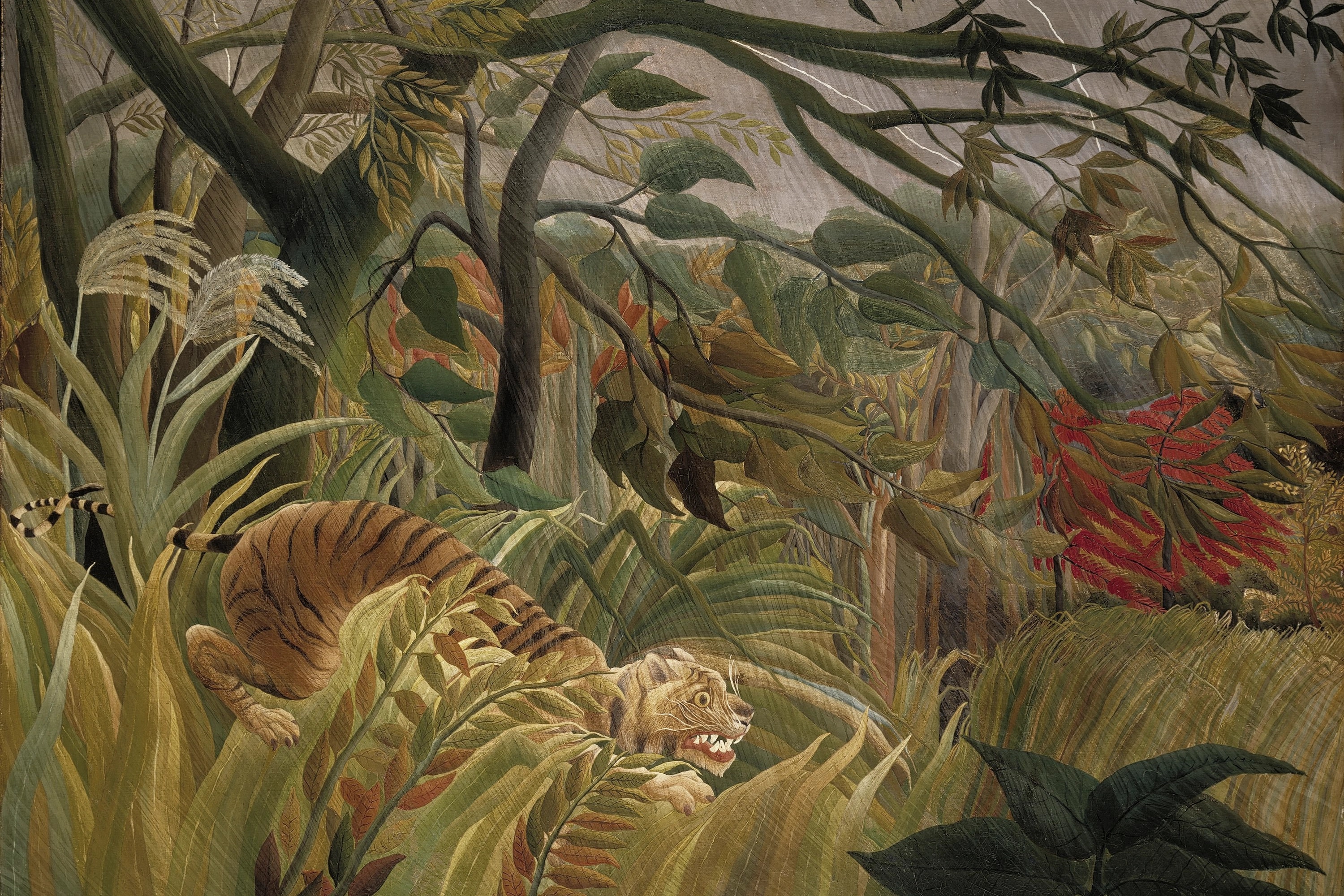
Five cities, one typhoon, and an honest accounting of a habit. On errands as license, gear that keeps you committed instead of dry, and the storm you don't miss but will remember.
The Register at 290
It was morning, the way mornings work on the second half of a trip, which is to say it was almost lunch. We had just woken up. Outside, Hong Kong was doing what it had been doing for days: raining like it meant it.
We didn't have enough umbrellas. We had one, plus a broken one nobody would claim. But I had the jacket, so a friend and I took the five-minute walk to the 7-Eleven.
The clerk looked up when we came in. By the later half of ten days she had stopped being surprised. There weren't a lot of customers at that store, even fewer tourists, and here were the same two soaked kids again, dripping in the doorway before noon.
We ordered a lot. Popsicles, drinks, microwaved food, triangle rice balls, custard buns, a rotation of steamed things whose names I only half know. Enough that the counter started to look like a supply drop. And because the trip was long and we were the kind of bored that invents stakes, we made a bet: over 300 Hong Kong dollars, he pays. Under 300, I pay.
So we watched the register. Item by item, beep by beep. There is a specific kind of theater in watching a number climb toward a line you drew yourself, and we gave it our full attention, the two of us leaning in like the total was a horse race.
It hit 290 Hong Kong dollars with one item left.
The last item was a third friend's rice ball. He wasn't even there. 10 dollars and 50 cents.
300.50. My friend paid. We split it in the end anyway.
The clerk gave us a box. We packed everything inside, stepped back out, and on the walk home the umbrella was protecting the box, not the people. The custard buns arrived dry.
We did not.
It's Only Logical
Before any of this gets romantic, two confessions.
First: it's cooler. Taipei in summer is unbearable, and rain fixes it, so it's only logical to go out. That is the entire argument. I have held it for years and it has never needed a second sentence.
Second, and I'm handing this one over reluctantly, because it's the closest thing I have to a trade secret: I almost never walk in the rain without an errand. The walks I take with no plan cut themselves short. Twenty minutes, maybe less, before some internal accountant notices the outing has no line item and files me back home. But give me a task, any task, even a 7-Eleven run that is honestly a five-minute walk, and suddenly I'm licensed. You're not loitering in a downpour. You're out for a reason, and nobody, including you, gets to question how long the reason takes. So you take the longest possible route.
The purest version lives near Sanchong station. The errand there is always small — a pickup, a drop-off, ten minutes of legitimate business — and in the rain I'll stretch it into an hour. Along the levee, through the covered walkways where the lights double on wet tile, back out into the open where the rain gets its say again. Nothing happens on this loop. No one is in it. It has never once produced a story — which is the closest thing I have to proof I'd do it without an audience. Same turns, same hour, same weather doing most of the talking. If the errand is the permit, the loop is what the permit was always for.
For the record, while I'm confessing: I hate drizzle. The bigger the better. The larger the rain, the less people go out, and that math has always worked in my favor.
The Elective Storms
The jacket was bought for a mountain trip I couldn't join. That's the whole backstory, and it stays a jacket: an Arc'teryx shell, my default anything below 20 degrees, white t-shirt underneath, worn across the entirety of Italy and most of the US until it became less clothing and more policy.
Here's the honest accounting of the gear, though. The shell works. The cap works. The On shoes were bought probably because they're waterproof, and they are, and it doesn't matter, because your socks get wet anyway and the water walks in through the ankle like it owns the place. The shoes are just there for the love of the game. Which raises the obvious question: what is all this waterproofing for, if I keep claiming I don't mind getting wet? I've settled on this. The gear doesn't keep you dry. It keeps you committed. It removes the excuse to turn back, the same way a camera with no screen removes the excuse to review. Rig the frame so staying is easier than leaving, then congratulate yourself on your discipline.
Because the satisfaction, the part I've never fully explained to anyone, is in the disobedience. Rain is a signal built to mean hurry. Even the people already outside are scrambling to be inside, umbrellas snapped low, timelines suddenly urgent. And there's a private, hard-to-defend pleasure in taking a signal built to make you rush and reading it as permission to stay. You are against a sky full of falling rain and yet you still choose to walk forward. Because of it, even.
Rome is the one I remember most, so it gets the least space. Winter, shell and cap, a sudden thunderstorm at the market, and I walked. Walked, walked, walked, straight into the subway, absolutely soaked, dripping onto the platform like a returned umbrella. It felt right. Somewhere in there Midnight in Paris surfaced on its own, the way songs do, uninvited and correct.
Brooklyn was less romantic. My sister and I, one small umbrella between us, leaving Dumbo after a flea market that inspired neither of us, pointed toward Williamsburg with a dinner reservation she'd landed and hours to burn before it. We ducked into Building 77 for a bathroom break, walked the long wet stretch along the water, and eventually gave up and took the bus. That's the whole story. Not every rain walk transcends. Some are just two people and inadequate equipment, and the bus wins on points. I keep it in the collection anyway. Control group.
Hong Kong again, a different day: the tennis court across the street, near-flooding, and beside it the children's playground. I climbed up and went down the slide. My shorts got absolutely drenched. They were normal shorts. I didn't mind.
Laying the scenes out like this, I notice the split I'd been narrating around for years. The solo walks, the Sanchong loops with nobody in them, are the practice. They don't become stories, because nothing in them needs a witness. But every rain that turned into a memory had someone in it: a sister in Brooklyn, a friend and a clerk in Hong Kong, a rice ball belonging to someone who wasn't even in the store. I'd been telling myself I love the rain because it empties the world. It's more particular than that. The rain empties the world, and whoever's left is the story. It shrinks the world to the people who stayed in it with you.
Day Five
Now scale up. From thunderstorm to typhoon, from shorts on a slide to a hundred people.
This July I spent seven days at NYCU for SITCON Camp, teaching the machine learning course and organizing the fireside chats, our nightly program where anyone can open a table on any topic and talk until the staff start yawning meaningfully. On day five, a typhoon hit. We retreated into the dorms for two days.
The organizer's ledger first, because it isn't flattering. The typhoon messed us up. We scrambled. Our run-of-show had no typhoon contingency, which in Taiwan, in July, is the kind of oversight you only get to make once. Courses moved indoors and remote, the engagement quality dropped with them, and there was nothing graceful about how we found that out in real time. Everything that follows should be read against that line of the ledger, not instead of it.
Because here's the other line: the fireside chats got better.
The designed version had friction we'd stopped seeing. A separate venue people had to walk to and choose to enter. Tables fighting each other acoustically across shared classrooms. A sign-up flow with just enough ceremony that opening a table felt like applying for something. The typhoon collapsed all of it into the dorm corridors. Hosts opened tables in their own rooms. The commute to a conversation became ten steps in socks. Sound separation came free, because dorm rooms ship with doors. People were suddenly hosting from their own territory, and it showed in how they held the room. Every problem we'd been half-managing dissolved, not because we solved anything, but because the storm deleted the layer the problems lived in.
I recognized the mechanism, because I own it in jacket form. The typhoon rigged the frame so staying was easier than leaving. The conversation was ten steps away, the storm had cancelled every competing plan, and there was no somewhere else to drift off to. One hundred people, zipped into the same shell.
I should be honest about my own night in it. When the retreat call came I was fairly anxious and had, privately, half given up on the program. Then I wandered into the table the schedule listed simply as "love", sat at the very back of a dorm room packed past any fire code's imagination, and had fun. Actual fun, the kind you don't have to talk yourself into afterward. The program I thought the typhoon had killed was breathing better than it ever had in its purpose-built venue.
The other image I kept is quieter. On one of the locked-down days I had to carry the keycards to a meetup point, because someone from the female dorms needed to collect things; one of the students had left her AirPods in Engineering Building 3, and a typhoon turns every forgotten object into a supply run with a rendezvous. The walk was ten minutes one way. It was empty. It was completely empty. A campus built for thousands, and the only sound was the storm workshopping different angles on the same trees. I won't pretend it was a view of a place I knew well. I'd been to NYCU four times in my life, total. But that's part of it. I was handed a version of the campus before I'd properly met the ordinary one, the way you sometimes hear the cover before the original.
I experienced that typhoon from inside its safest possible container, dorms and food and a duty roster, while elsewhere on the island the same storm was flooding people's homes.
My day job is attacking language models to find where their safety breaks, and that week a typhoon red-teamed our camp and located the one subsystem that ran better under attack than as designed. The dorm-room fireside chats were the patch we would never have found ourselves. We didn't fix the flow. The adversary did.
The Clearing
The weather cleared the day before the last day, and the campus did what campuses do, which is fill back up with reasons. Courses returned to classrooms. The field reappeared from under the sky. A hundred people remembered they had legs.
That night, with a full day of camp still ahead of us, the staff drifted to the open food-court area near the women's dorms, outside the campus 7-Eleven. The place is dark after hours and there's no air conditioning, so I solved the climate the only way available: a popsicle, and a ice cup, which is just a cup of ice you pour a bottle of Pocari over, a drink that costs almost nothing and tastes like the exact temperature you wish the air was. Fifteen of us, give or take, on chairs under a sky that had run out of things to say.
We talked until 3am. Gossip, mostly. Community stories, who said what at where, stories with three narrators and no agreed ending. Then, the way 2am conversations do, it slid somewhere quieter, into relationships, the register that only opens once the performative hours are over and everyone's too tired to curate.
Here's the double ledger, and I'm not going to resolve it. The organizer in me is glad the typhoon ended. Courses suffered, flows broke, and the last day deserved the sun it got. But the person in me knows exactly which part of that week I'll still be telling in ten years, and it isn't the parts that went to plan. Not despite the typhoon. Because of it.
Roy Batty says his moments will be lost in time, like tears in rain, and he says it like a tragedy. I've never fully bought the framing. Merging into something larger isn't obviously loss; maybe when you finally see the ocean, you understand where all the individual rain was headed. But sitting there at 2am, I caught the quieter half of the inversion, the half the monologue never gets to. The rain leaving isn't loss either. The moments don't need the storm to persist. The storm is just how they got made — and then it's allowed to go.
The ice in my cup ran out somewhere around two. Nobody checked the weather.
Acknowledgments
- Title image: Tiger in a Tropical Storm by Henri Rousseau, Public Domain, Link. A tiger mid-stride in a downpour, in a jungle painted by a man who never left France. The storm is the only thing in the frame that isn't rigged.